
FROM MY TRAVELS
London to Amsterdam
Last updated: September 2026
My first Europe trip in 2024 had been on the bucket list for years. It became 27 days, 26 nights and eleven overnight bases, from London to Amsterdam. I loved finally doing it, but there is a lot of moving in that sentence. Use this route as a starting point. Give the places you care about most a bit longer. You don’t have to copy every stop just because I went there.
Route overview
Stops are approximate. Dashed lines show the order, not the roads. Optional stops are swaps, not extras.
Select a stop below to locate it. Drag to pan; use the controls or arrow keys to explore.
Before you go
- This route uses pounds in London, euros in France/Italy/Spain/Belgium/the Netherlands, forints in Budapest and Swiss francs in Switzerland. Check the terminal’s currency before paying.
- Cards are widely useful, with a little local cash for smaller purchases. Keep a second payment method separately from your main wallet.
- Each city has its own transport tickets; there is no single metro card for this route. Book international trains and flights separately and save the exact station or airport.
- Use local official journey planners for the last city connection. Licensed taxis or ride-hailing help with luggage but do not remove the need for an airport buffer.
- Download language packs and local addresses before changing countries. A greeting in the local language helps: bonjour, buongiorno, hola and danke cover several legs.
- Check every country in a regional eSIM or roaming plan, especially the UK and Switzerland. Save tickets and boarding instructions offline before each transfer.
Sorting out the practical bits? See the tools I use when I travel for data, bookings, gear and China payment tips.
A note on the links I may earn a commission from bookings or purchases through these affiliate links.
A route for your visit
Includes arrival and departure days, which also link to the next part of the trip.
Days 1–3 — London
London was the start of the trip, with an evening arrival and two full days to explore. Keep the first night simple. Dinner near the hotel and some sleep.
London’s riverfront brings government, royal ceremony and everyday city life into the same walking route. Enjoy the mix before moving on to the next capital.
Spend the first full day around Westminster, then have dinner near your West End show. Use the second for Borough Market and the river towards Tower Bridge. If you’d rather do a museum or afternoon tea, swap it into the afternoon. Don’t add another stop. Leave the Paris departure morning for the station and boarding.
The Seine links big monuments with small neighbourhood streets, so a simple walk can be as good as a big booking. Leave some of the stay free to look around without a ticket time.
Days 4–6 — Paris
After the train from London, drop your bags and start with a river walk. I had bookings for the Eiffel Tower and the Louvre, so I’d plan everything else around those, with a gap after arriving. If the Louvre is on your Paris list, compare Louvre visit options on Viator with the museum’s own admission before fixing the rest of that day. For these nights, browse Paris stays on Trip.com around your arrival connection and the places you’ll walk to.
Give the Louvre a substantial half-day, followed by lunch and the Tuileries. For the remaining full day, choose a slower wander through the Latin Quarter or a separate trip to Versailles. Pick whichever you’re most excited about. Both won’t fit in three nights.
Days 7–8 — Budapest
Budapest is a short stop: two nights, with a flight using part of the arrival day. Stay local that afternoon and save the real exploring for the next morning.
Budapest’s hills and flatter Pest riverfront give the Danube two distinct city edges. Use the river to get your bearings. Don’t race between viewpoints.
Pair the Buda Castle area with views along the Danube, then give the baths a proper break in the day. Check the entry arrangements for your chosen bath before going. Dinner in the Jewish Quarter makes an easy finish; there’s no need to turn the evening into another sightseeing list.
Days 9–10 — Venice
Get your bags to the accommodation before heading into Venice’s lanes. The airport transfer eats into arrival day, so keep the first outing close to your hotel.
Venice’s canals and pedestrian lanes make water part of ordinary movement through the city. Wander a little past the busiest approach, but remember people live on these streets.
For the full day, choose one part of the city to explore, leaving time beside the canals and for a meal without watching the clock. Book an interior if there’s one you especially want to see. An outer-island trip can take up part of the day. With only two nights, decide whether you’d rather travel or wander.
Days 11–12 · Florence, with Pisa a genuine choice
Take the train to Florence for two nights. If the Uffizi is a priority, choose a ticket that leaves room for the train journey, dropping bags and lunch; the next morning may be more comfortable than arrival day.
Florence’s churches, palaces and art collections make its Renaissance history unusually concentrated. Pick one collection and spend time with it. You can’t see every famous work.
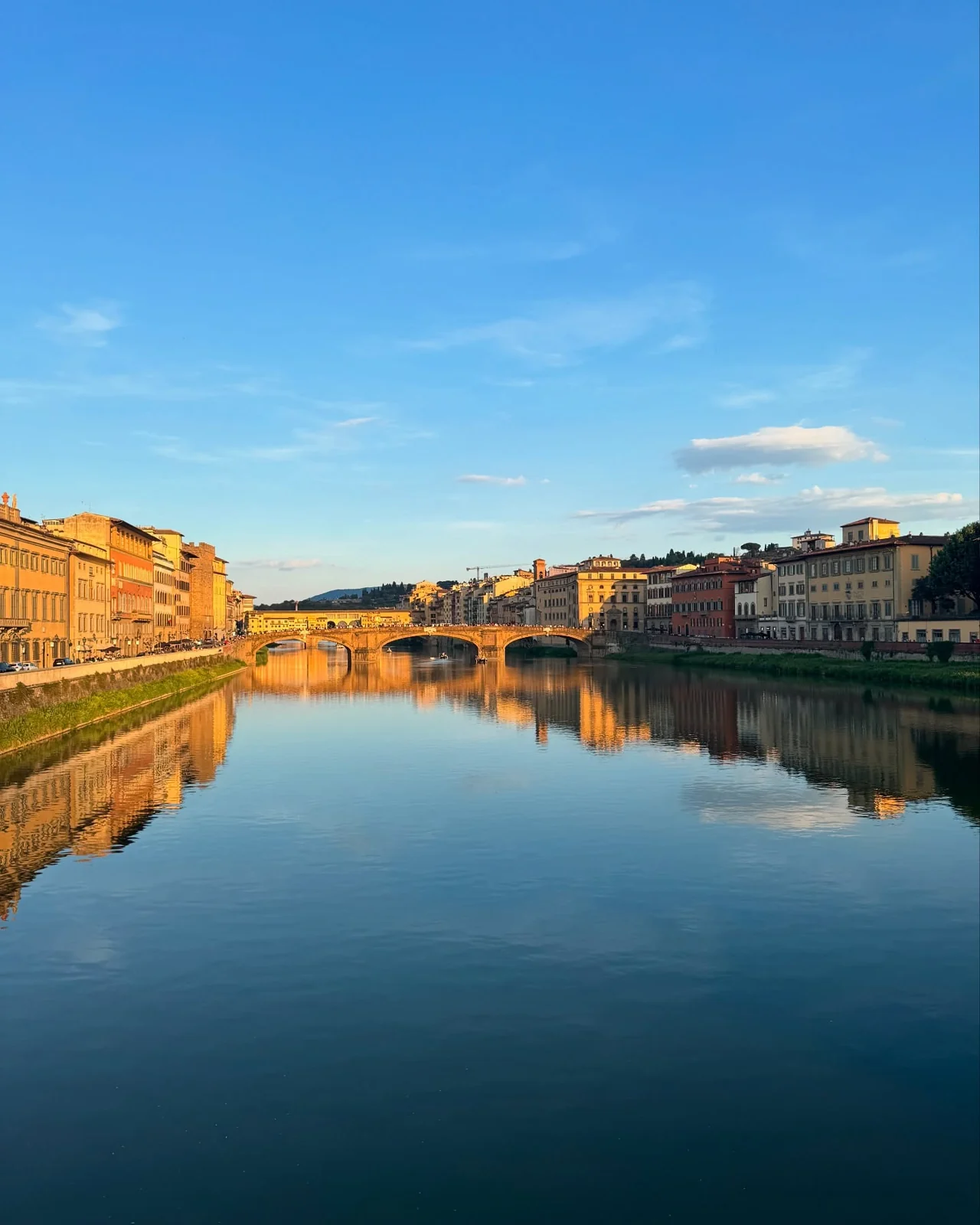
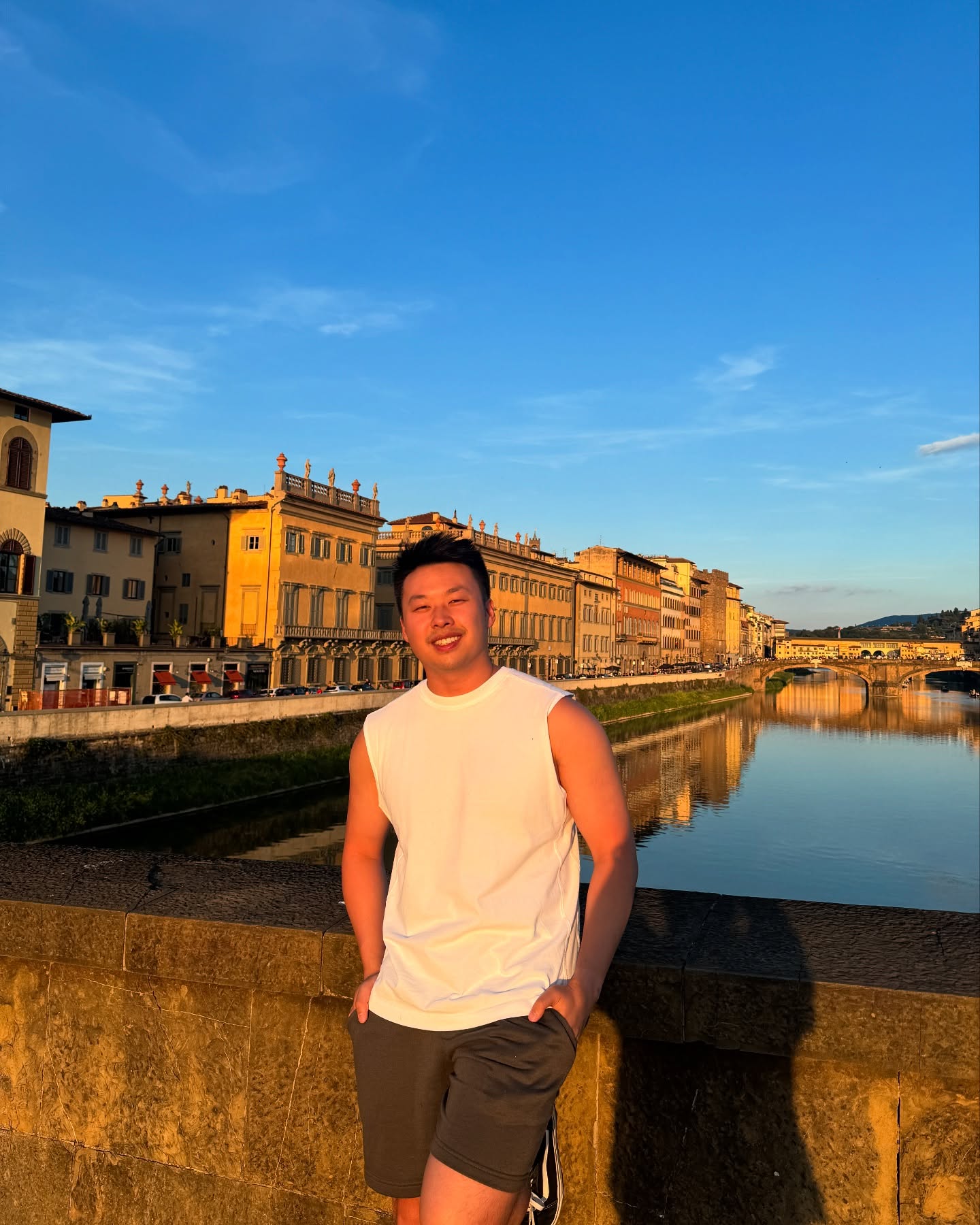
Florence’s riverside buildings reflected in the Arno. If it’s your first time in Florence, I’d stay the second day to see more of the city. Pisa is an alternative excursion, so count the return journey before committing. Leave the following morning for the train to Rome.
Pisa’s leaning tower belongs to a larger cathedral complex, so the surrounding buildings give the stop more meaning than the familiar pose. Only add the detour if you have time to enjoy the wider view.
Rome layers ancient remains, churches and present-day streets in a way that makes the walk between bookings part of the visit. Leave space to spot where they overlap.
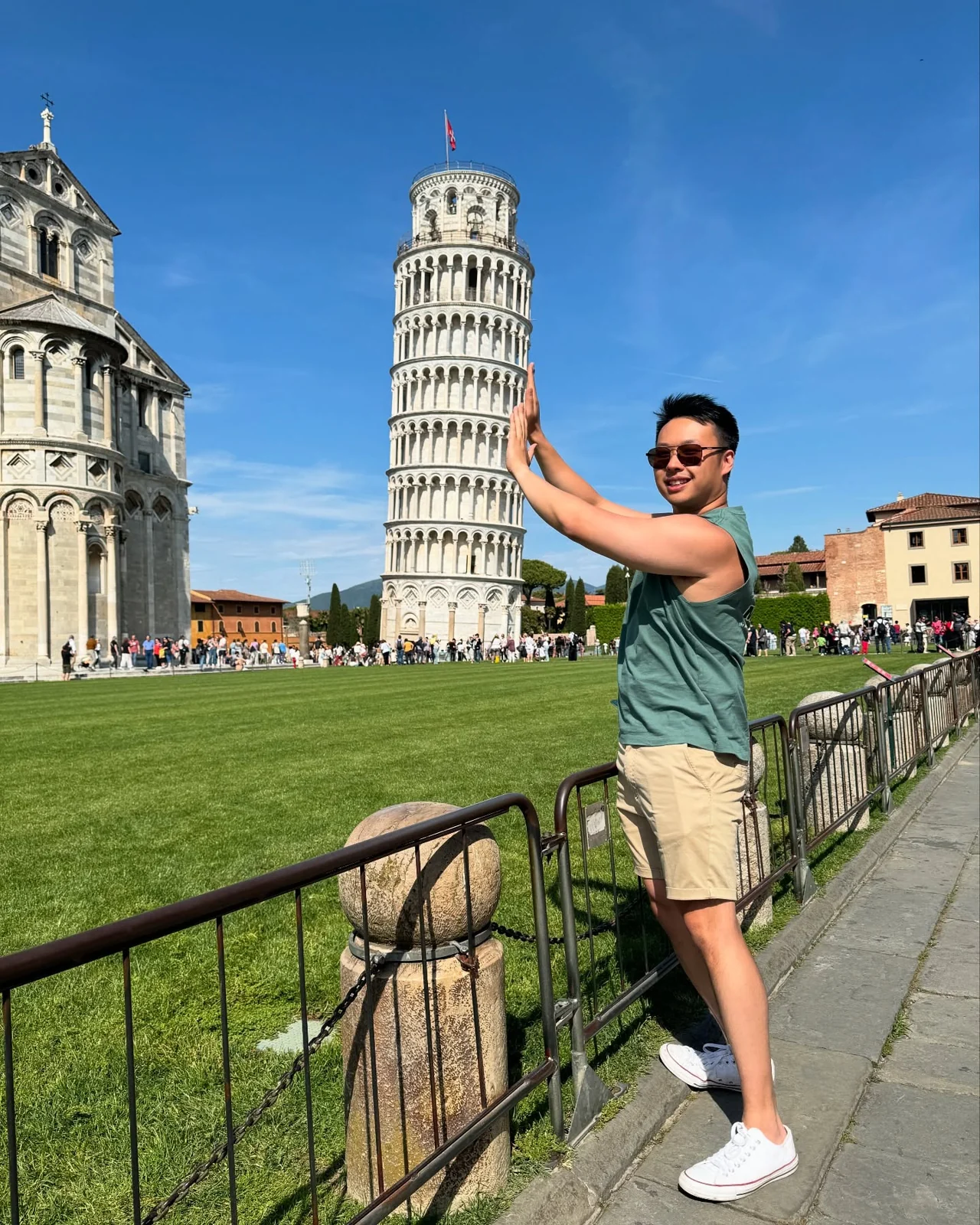
The Leaning Tower of Pisa and its lawns. Days 13–15 — Rome
My planner included bookings for the Colosseum and Vatican Museums. With three nights in Rome, I’d give each its own day and keep the arrival afternoon for settling in and a short walk.
The Colosseum makes the scale of Roman public spectacle tangible, while its interpretation explains the people and systems behind it. Take time with the history, not just the photo loop.
The Vatican Museums combine papal collecting, major artworks and richly decorated rooms. Pick a route you can manage. You won’t see it all in one visit.
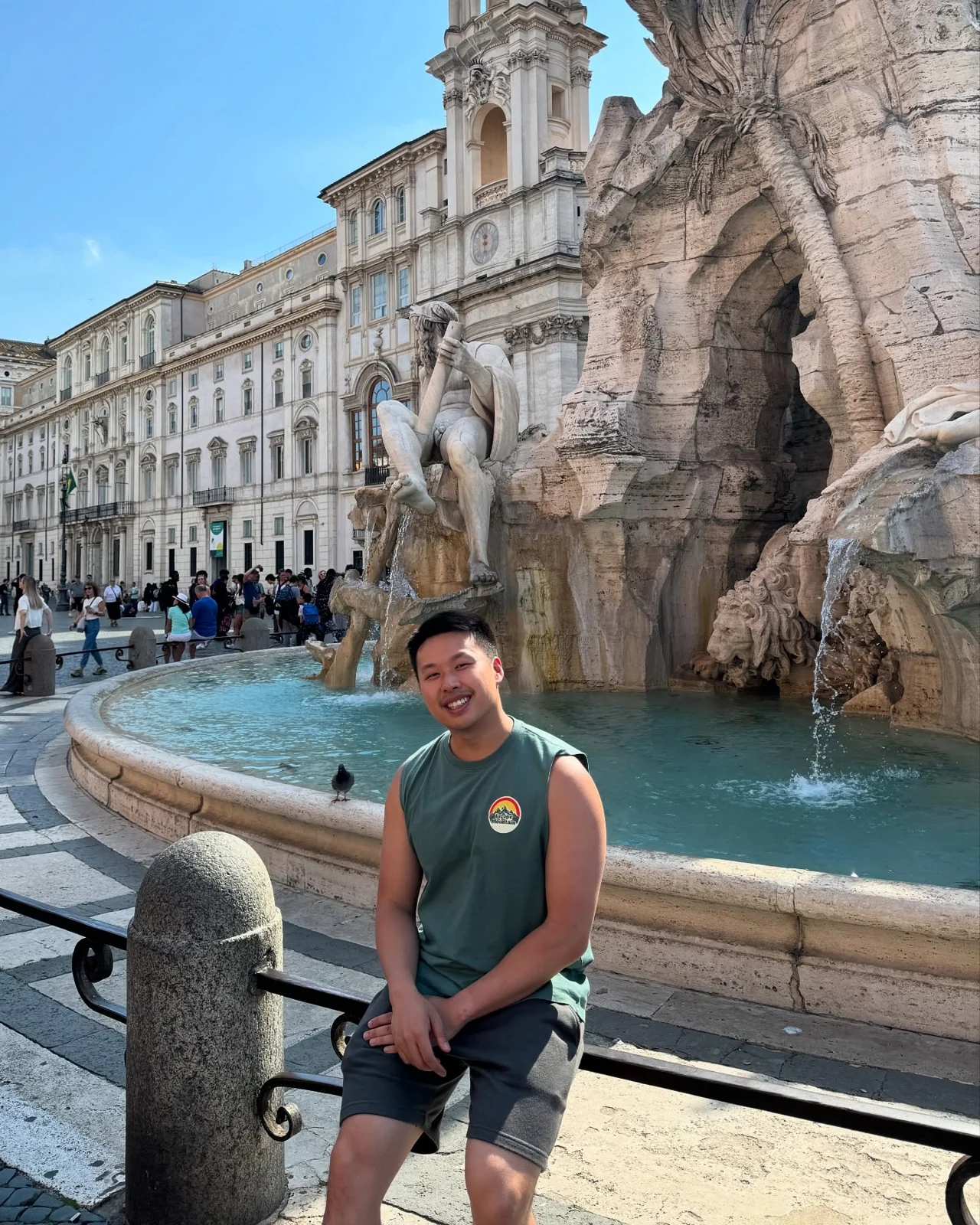
The Trevi Fountain in Rome. Plan lunch near the day’s main visit and leave room to sit down afterwards. Smaller stops can fit into those neighbourhood walks. Don’t add another excursion here. The big visits are already hard enough on your feet.
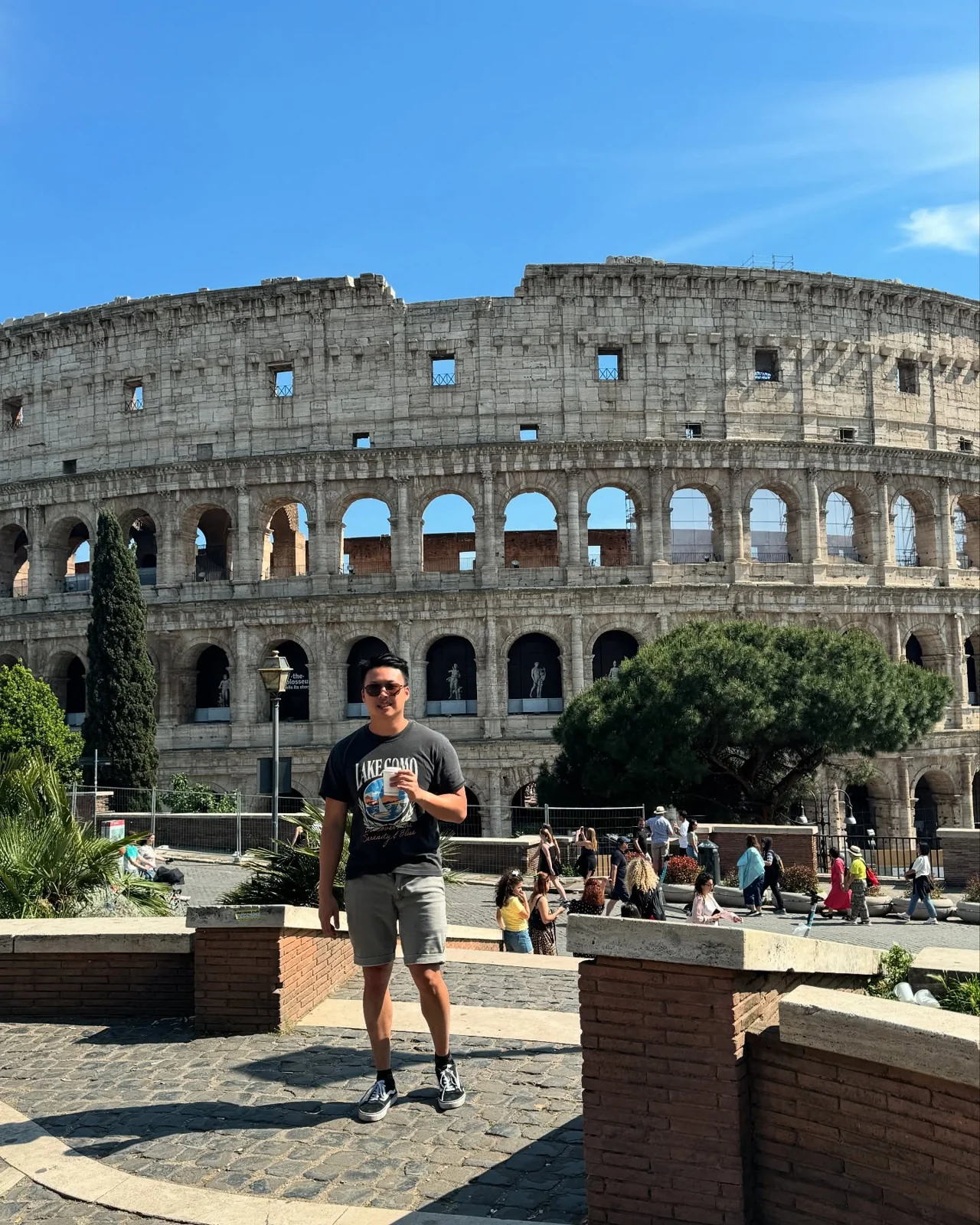
The Colosseum in Rome. Days 16–19 — Lucerne and Zurich
Fly to Zurich and continue to Lucerne for three nights, then return to Zurich for the final Swiss night. After the Italian cities, this is where I’d slow down a bit.
Lucerne’s lake and older streets give the trip a quieter scale after the Italian cities. Start with the water, then decide how much mountain travel to add.
Zurich’s river and lake edges offer a straightforward city walk between longer travel legs. Enjoy a small area properly. It’s more than an airport stopover.
Choose one mountain day from Lucerne and leave the other full day flexible for the town and lake. If a scenic railway is the priority instead, work out the exact route, connections and pass coverage first. Check the forecast before settling the order; Titlis, Pilatus and GoldenPass are separate choices, not a two-day checklist. Use the Zurich transfer afternoon for a local walk and dinner.
Days 20–22 — Barcelona
Barcelona gets three nights, including the flight arrival. Sagrada Família was my fixed booking, so I’d plan that day around the ticket and have lunch nearby after.
Sagrada Família’s architecture uses light, structure and symbolic detail to create a very particular interior. Give the booked visit plenty of room. Don’t squeeze it between other timed stops.
Keep the other full day for neighbourhood walks with breaks along the way. An evening performance is an option if something catches your interest; choose dinner around its time and location. This late in the trip, leave some space. Skip the far-off excursions.
Days 23–25 — Belgium: Brussels and Bruges
Bruges was canal views, cobbled streets and a strawberry-and-chocolate waffle that didn’t stand a chance. These are the little moments from my Belgian stop: seeing the city from the water, then taking a break for something sweet.
Bruges’s canals and merchant buildings show the wealth of a historic trading city at a walkable scale. Leave time for the quieter streets between the famous bridge views.
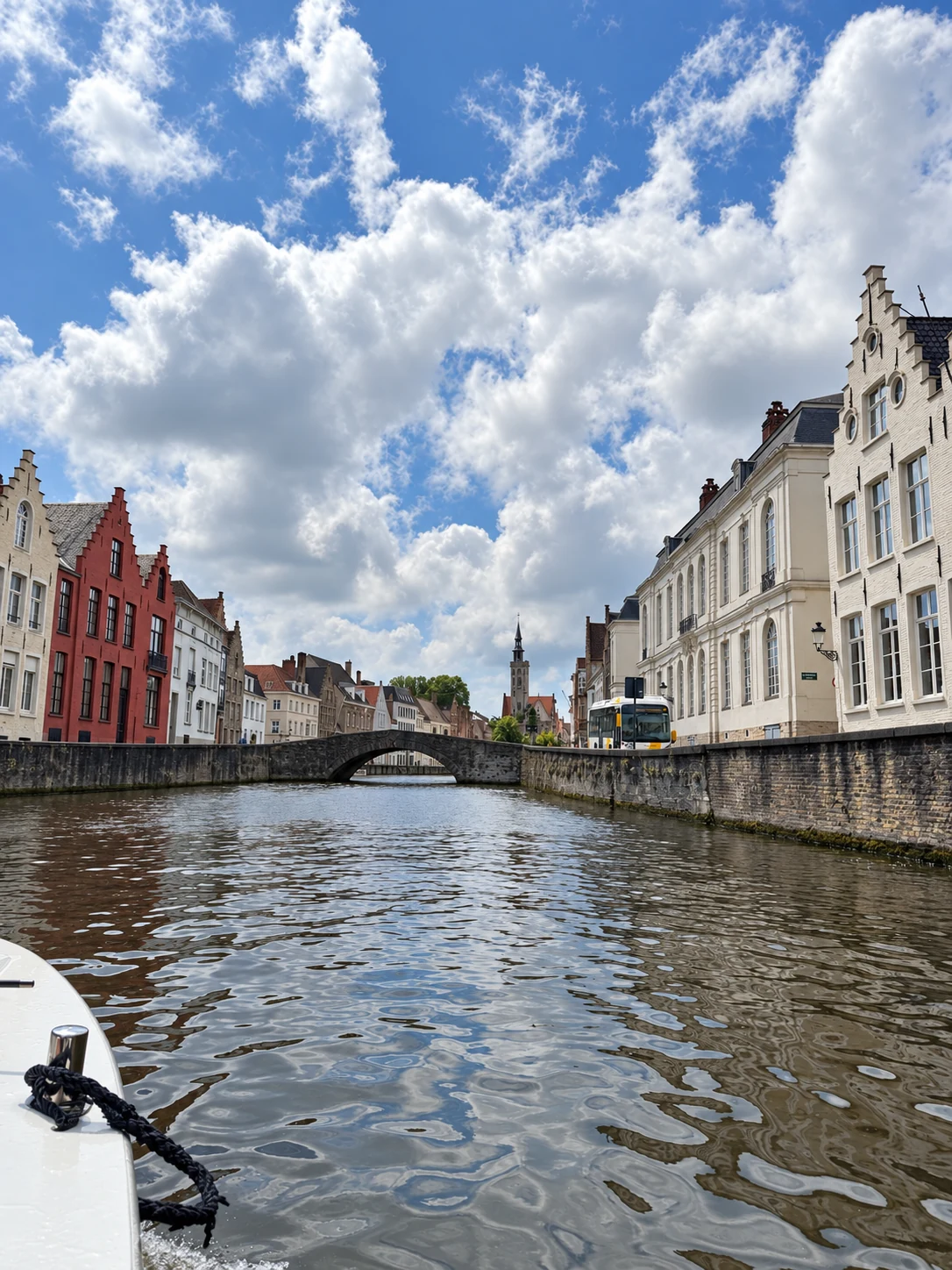
A view from the canals of Bruges. With three nights in Brussels, I’d give Brussels a full day and Bruges another, including the train. Leave room in Bruges for a canal trip, a walk and a waffle. Don’t fill every hour. Ghent is another option if you’d prefer a different excursion; choose one so there’s still time to enjoy Brussels. Keep the final evening easy before moving on to Amsterdam.
Brussels’s central squares reveal a civic and trading history quite different from the canal towns later in the route. Look at the façades and take your time over a meal before moving on.
Amsterdam’s canal rings make its trading-city history visible in the layout as well as the buildings. It’s fun seeing the same streets from the footpath and then from the water.
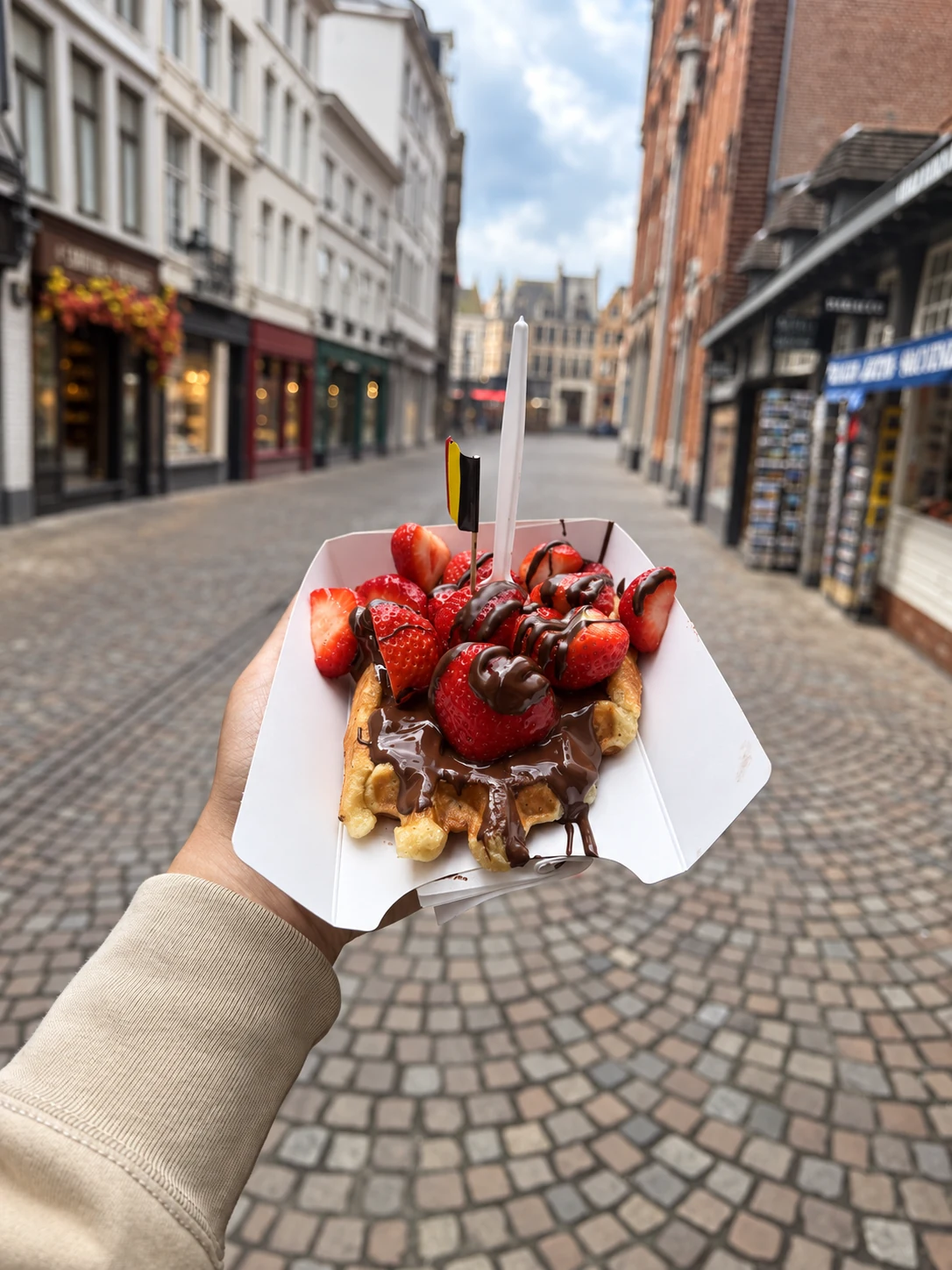
Strawberries, chocolate and a waffle stop in Bruges. Days 26–27 — Amsterdam
Amsterdam was the final stop on my Europe trip. Seeing the canals from a boat gave me a different view of the city: trees along the water, narrow houses and bridges passing overhead. Keep the arrival afternoon for a canal trip and dinner nearby. For a canal cruise, search Amsterdam on GetYourGuide and choose a departure point you can reach comfortably after check-in.
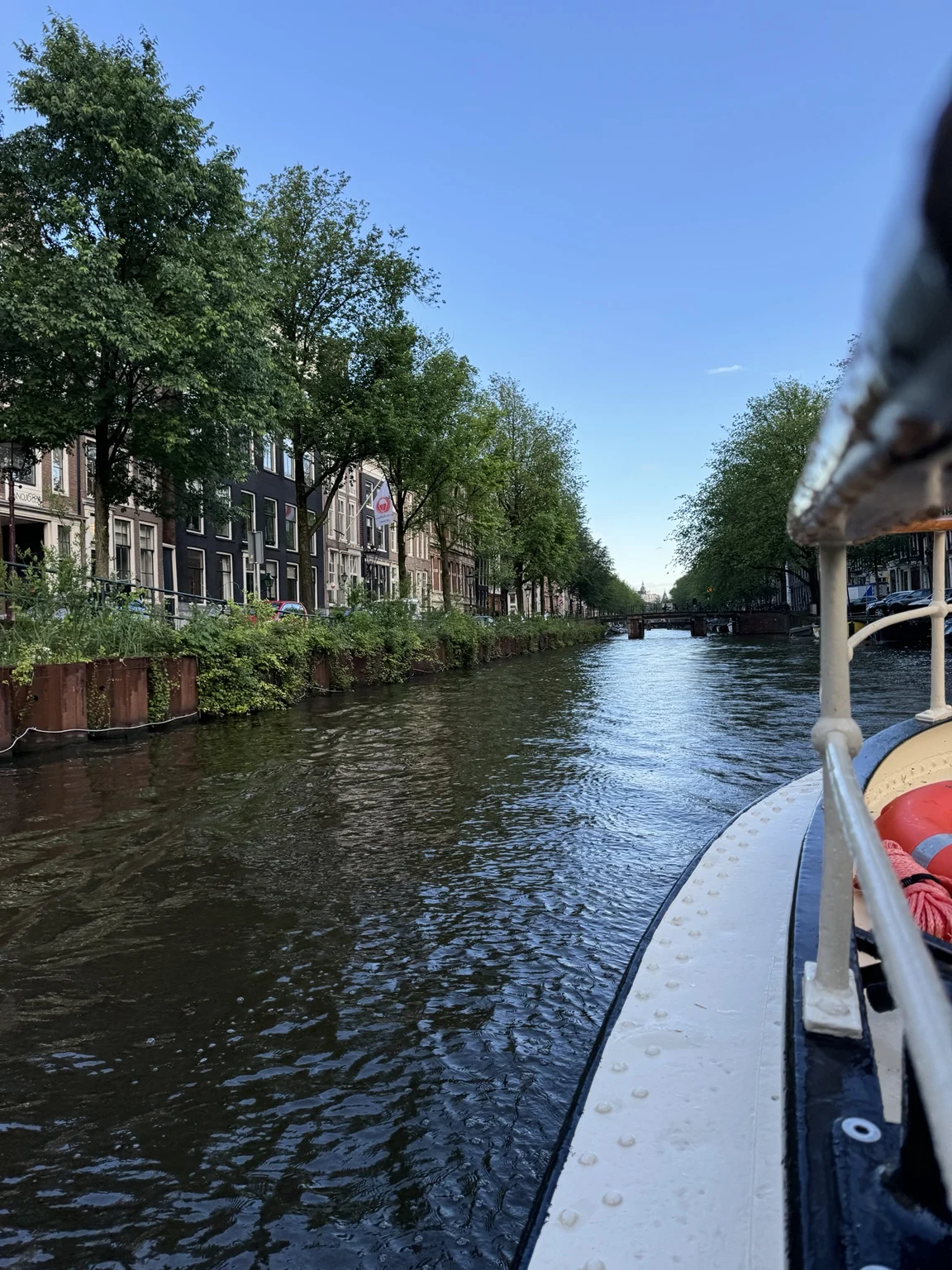
A slower look at Amsterdam from the water. Leave some time to wander as well. A flower-covered cart, a cobbled street, a corner you weren’t looking for — these are the little things I like having room for between the bigger stops.
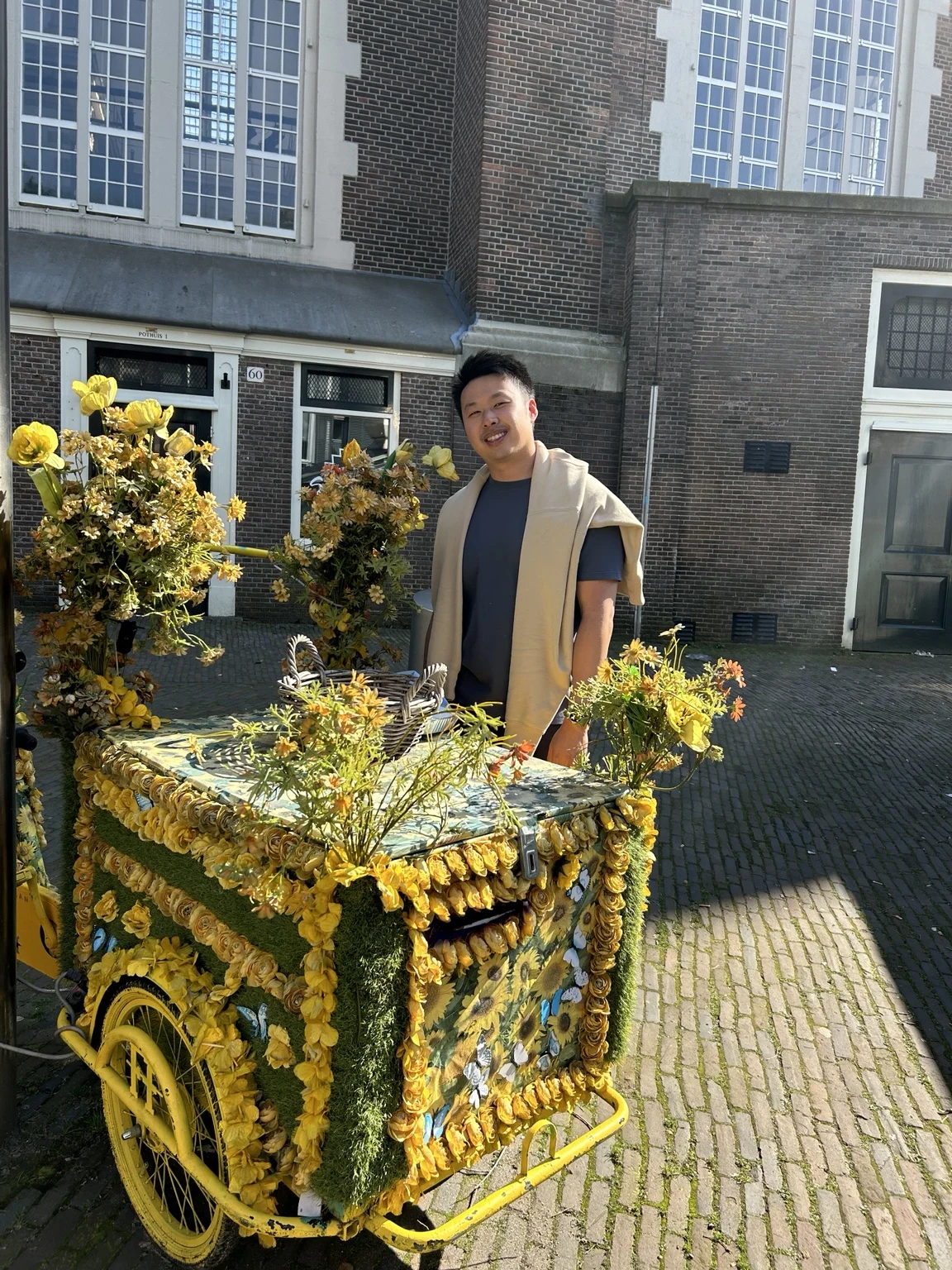
A little colour between the city walks. The rows of bicycles were a sight in themselves. Keep an eye on the cycle lanes when walking, especially when stopping for a photo. Before planning the final day, work backwards from your flight and allow time to collect your bags and reach the airport.
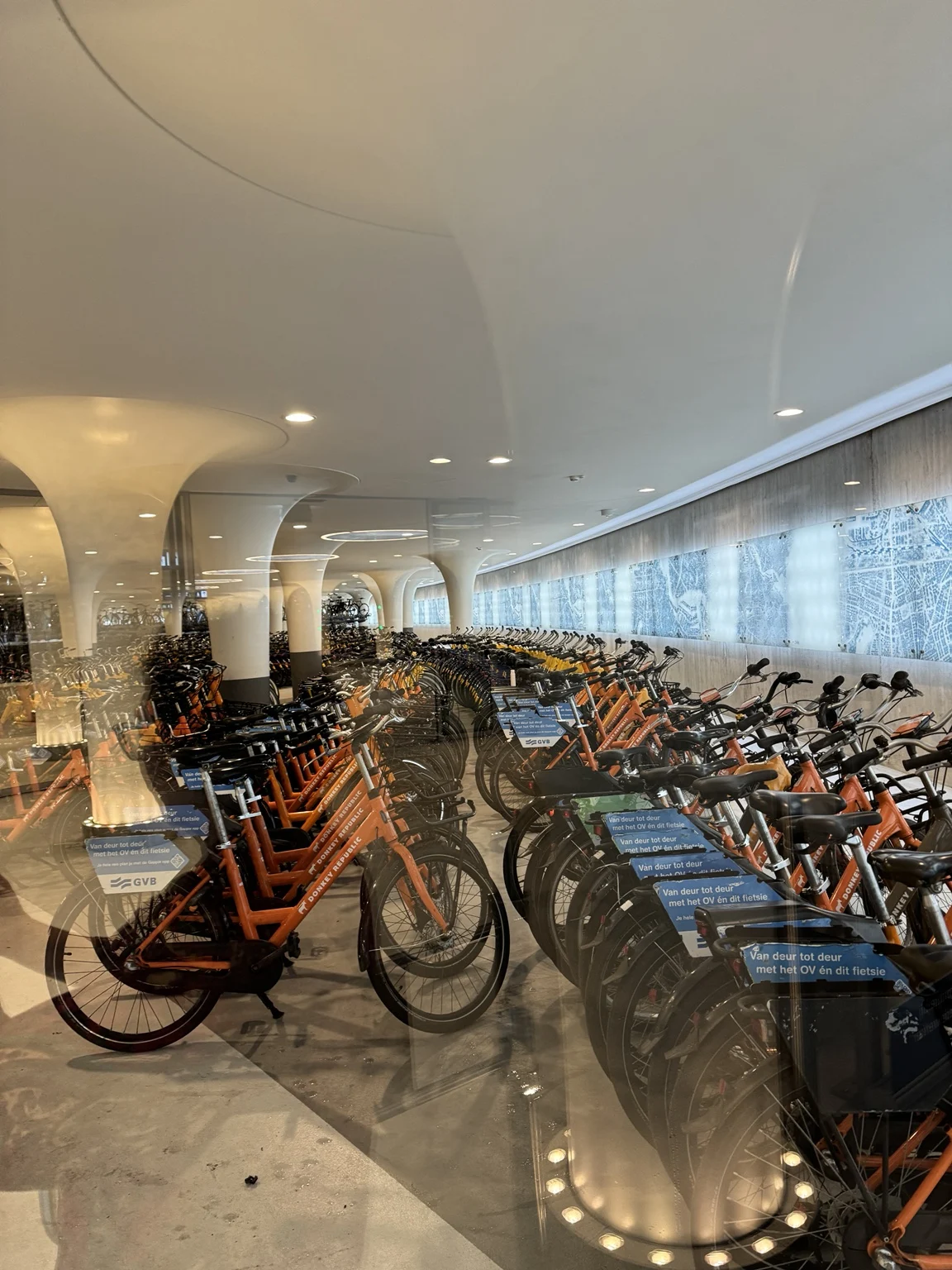
Bicycles, everywhere you look. Zaanse Schans — a windmill detour
Zaanse Schans was another part of my time in the Netherlands: green windmills beside the water, open skies and plenty of reasons to stop for a photo. I liked seeing them across the waterfront before getting a closer look.
Zaanse Schans presents windmills and traditional buildings connected with the region’s industrial past. Find out what the mills actually did, not just how they look by the water.
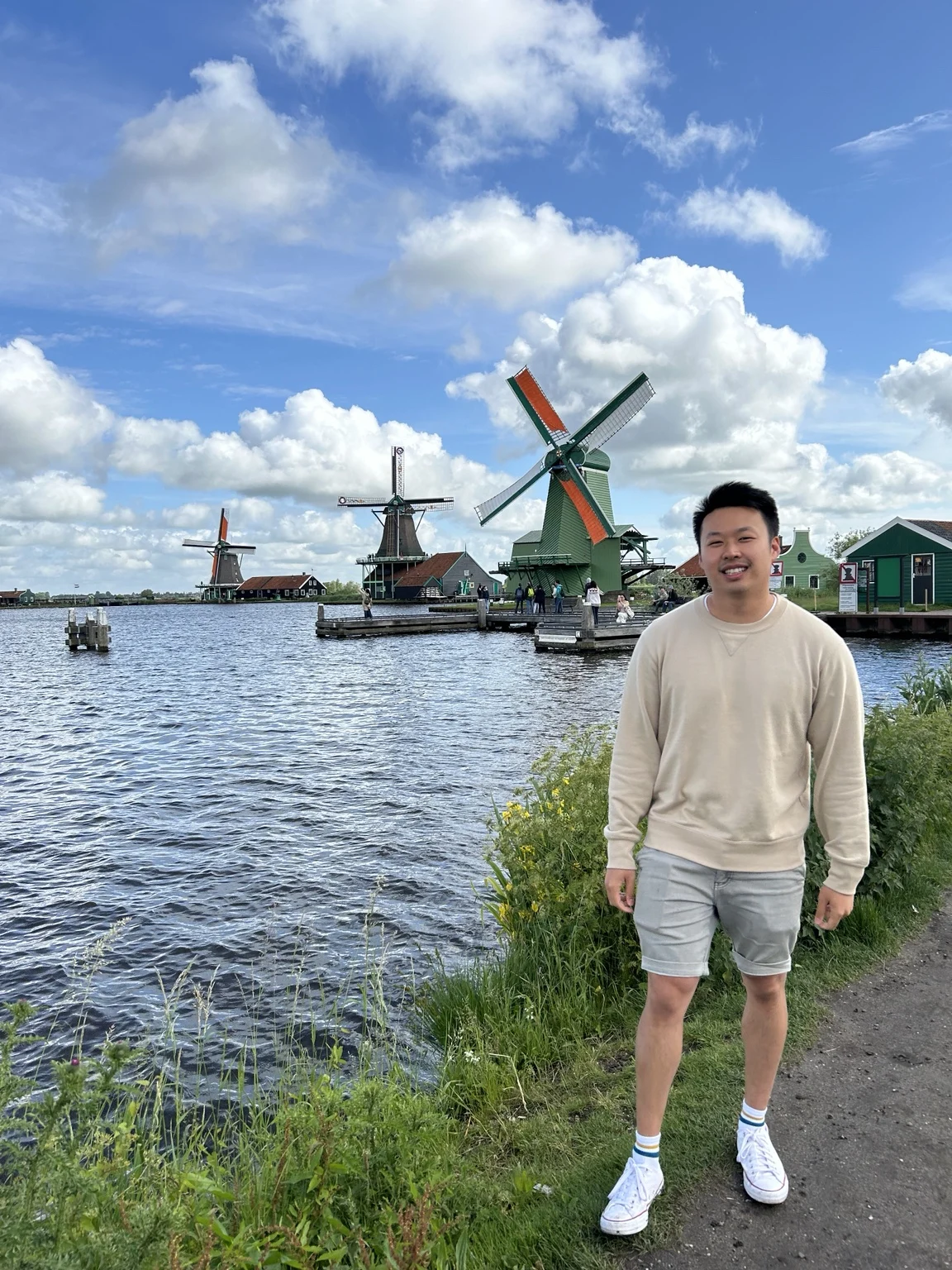
Windmills along the water at Zaanse Schans. The green De Poelenburg windmill made a particularly good backdrop. Leave time to walk around and enjoy the setting. It’s more than a quick photo stop.
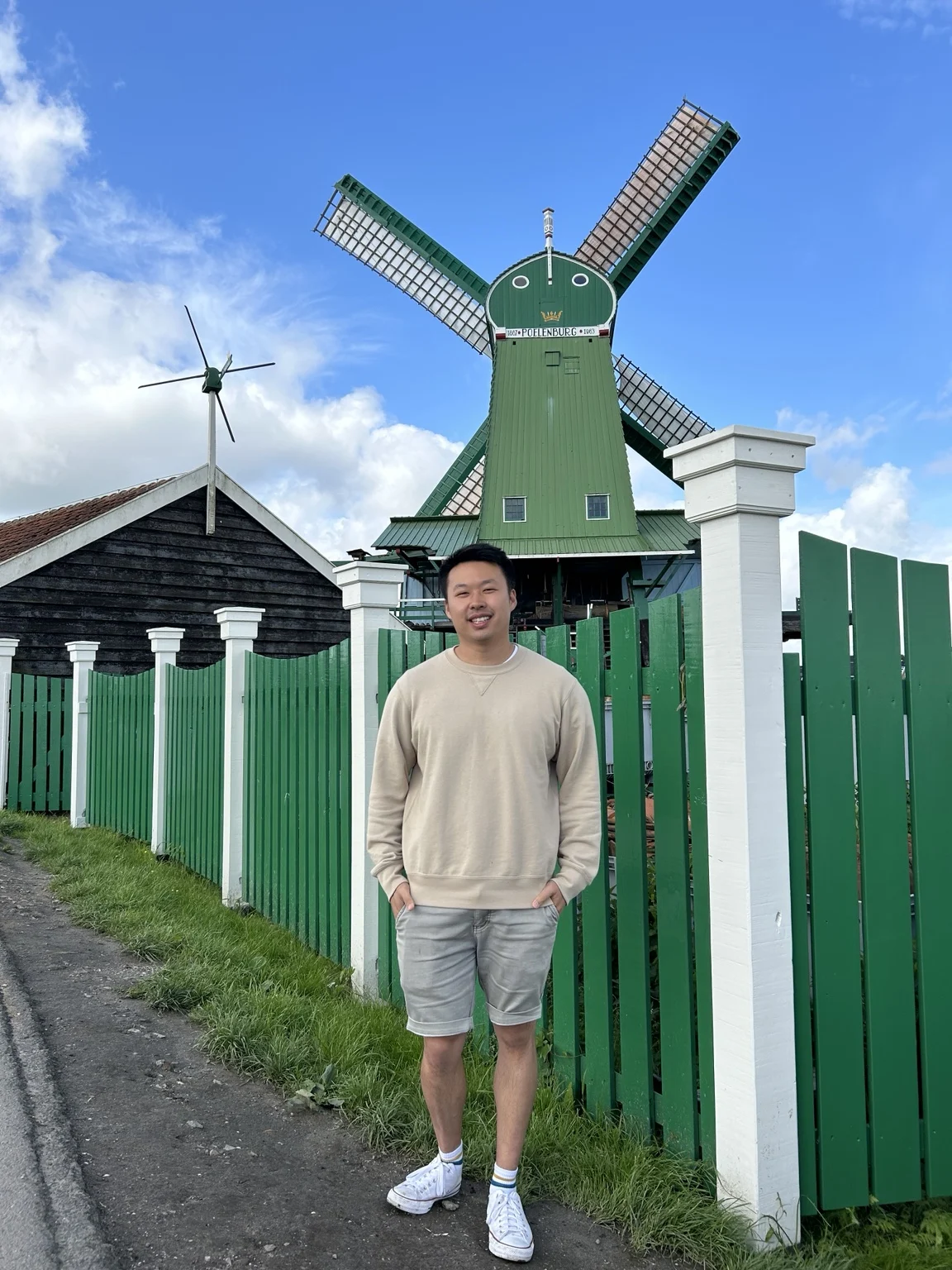
A closer look at De Poelenburg. With only one night in Amsterdam on this route, check whether the return journey fits comfortably before adding Zaanse Schans. Do it instead of a museum, or add a night in Amsterdam if you want both. Keep the airport journey clear on departure day.
A few seconds among the windmills. How to shorten the trip
For about two weeks, I’d drop whole legs before cutting every city down to one night. Choose a connected section, such as London and Paris with one further region, or Italy and Switzerland.
Fewer bases mean fewer checkout mornings and airport journeys. Keep a few afternoons without timed tickets so there’s room for tired feet, changing weather or a place you want to stay a little longer.
Booking order and practical checks
Start with the international travel dates, overnight bases and long-distance connections, then add the attractions you most want to see. Leave a comfortable gap between arriving in a city and a non-refundable booking.
Keep each arrival station or airport, hotel address and next departure together in one place. Check current timetables, boarding guidance, luggage limits and change terms with each operator; the arrangements from my 2024 trip won’t necessarily apply to yours.
What to budget
Prices checked September 2026. These are for the named ticket or service. Check your date and what’s included before you pay.
- Adult zones 1–2 daily transport cap: GBP 8.90 — Oyster/contactless pay-as-you-go cap; use the same card or device throughout. Airport journeys outside these zones and premium services cost more. Price source
- Louvre general admission: EUR 22–32 — 22 for EEA residents/citizens; 32 for other visitors under the current 2026 schedule. Free-entry categories apply separately. Price source
- Titlis adult return from Engelberg: CHF 102 — Standard pedestrian return; Ice Flyer and some newer attractions are extra. Eligible passes can change the fare. Price source
Budget EUR 15–35 per person for a simple meal. That’s a rough guide. Drinks and nicer restaurants cost more. Price transfers separately, especially private drivers, boats and airport trips.
A few photo tips
- For city riverfronts, use blue hour from public promenades and bridges without blocking pedestrians; it can balance the sky and building lights.
- In Venice and Bruges, try an early walk for quieter canals, respecting homes and narrow crossings.
- For museums and churches, check the specific room’s camera rules; put the camera away where photography or tripods are prohibited.
- In Switzerland, keep the clearest day for a mountain view and use lake or building details when the peaks disappear into cloud.
If the weather changes
Swap an exposed walk for a museum already on the route, a booked interior or a longer local meal. On transfer days, keep the railway or flight connection fixed and move the sightseeing instead.
The final day and your flight
Morning flight: stay within reach of Amsterdam Schiphol Airport the night before, then keep the morning for checkout and the transfer. Allow for the airline’s check-in time as well as the trip.
Afternoon flight: keep a short canal walk and breakfast near the final hotel, then collect bags; leave Zaanse Schans for a separate free window, not a tightly timed pre-flight detour. Work out the transfer and bag pickup time before deciding when to finish.
Booking checks
Set the overnight route and long-distance connections first, then book major timed attractions with room around arrival days. Check opening days for Versailles and the exact mountain and rail journeys for Switzerland.
Useful booking links (optional)
Connected, from arrival.
Keep maps, hotel details and bookings close at hand. Find an Airalo eSIM for your next trip.
15% offNew Airalo usersANDYPANELNEW10% offAll Airalo usersANDYPANELCodes apply automatically through these links. Valid until 30 June 2027.
Before you buy, check your phone is unlocked and supports eSIMs, and look at the coverage, data and activation rules.
I may earn a commission through these links. As an Amazon Associate I earn from qualifying purchases.