
FROM MY TRAVELS
Uluru with time to listen
Last updated: September 2026
Sunset at Uluṟu was one of those moments where I wanted the photograph and also wanted to stop taking photographs. I’m grateful to Aṉangu for sharing this place. My other lasting piece of advice is less poetic: bring a fly net. For a first visit, begin with the Cultural Centre, choose your walks carefully and give both the heat and the distances some respect.

Route overview
Stops are approximate. Dashed lines show the order, not the roads. Optional stops are swaps, not extras.
Select a stop below to locate it. Drag to pan; use the controls or arrow keys to explore.
Before you go
- The Uluṟu climb has been permanently closed since 26 October 2019. Respect Aṉangu’s wishes and plan your visit around permitted base walks, cultural experiences and designated viewpoints. Read about the climb closure
- Tap and go works almost everywhere. Keep a little cash for small stalls and watch for card surcharges.
- Public-transport ticketing differs by state. Check the local ticket system. One city’s travel card won’t always work in the next.
- Uber and taxis are easy in the cities. For national parks, small towns and early pickups, book both directions. Don’t count on finding a car out there.
- English is spoken everywhere. Download the day’s map and save the exact trailhead or meeting point, especially outside town.
- Get a local SIM or an eSIM and check coverage along your route. Having signal in town doesn’t mean you’ll have it in a gorge, on an island or on a mountain road.
- Save your last connection and accommodation address offline. On driving days, sort out fuel, food and the way back before you leave town.
Sorting out the practical bits? See the tools I use when I travel for data, bookings, gear and China payment tips.
A note on the links I may earn a commission from bookings or purchases through these affiliate links.
A route for your visit
Adjust the pace to suit you.
Cultural context before choosing the walk
Spend time with the Cultural Centre’s interpretation before heading to a permitted walking area or viewpoint. Follow Aṉangu guidance on places and photographs. If you arrive in the heat of the day, move the walking to a cooler time. Don’t try to finish before lunch. An arrival afternoon may be a viewing day, with walking left for another morning.
The Cultural Centre introduces Aṉangu knowledge and the living cultural importance of Uluṟu-Kata Tjuṯa. Start here so you understand what the land means, not just how it looks.
Day 1 midday · Rest in Yulara
Return to Yulara for lunch and a rest during the hotter part of the day. This gap is intentional, not wasted sightseeing time. Use it to prepare water, layers and transport for the evening.
Yulara is where you can eat, refill supplies and get out of the strongest heat. Have lunch, recharge the camera and prepare the evening bag with water, a layer and the fly net you’ll be glad you brought. The pause is part of a workable day in the Red Centre. If you arrived on a morning flight, use this time to settle into your room. A travel day doesn’t need to be a hiking day.
Day 1 evening · A designated sunset view
Travel to a permitted sunset viewing area with time to settle before the light changes. Stay within the marked area and watch the colours with your eyes as well as through the camera. Have dinner back at your accommodation or on a separately booked experience.
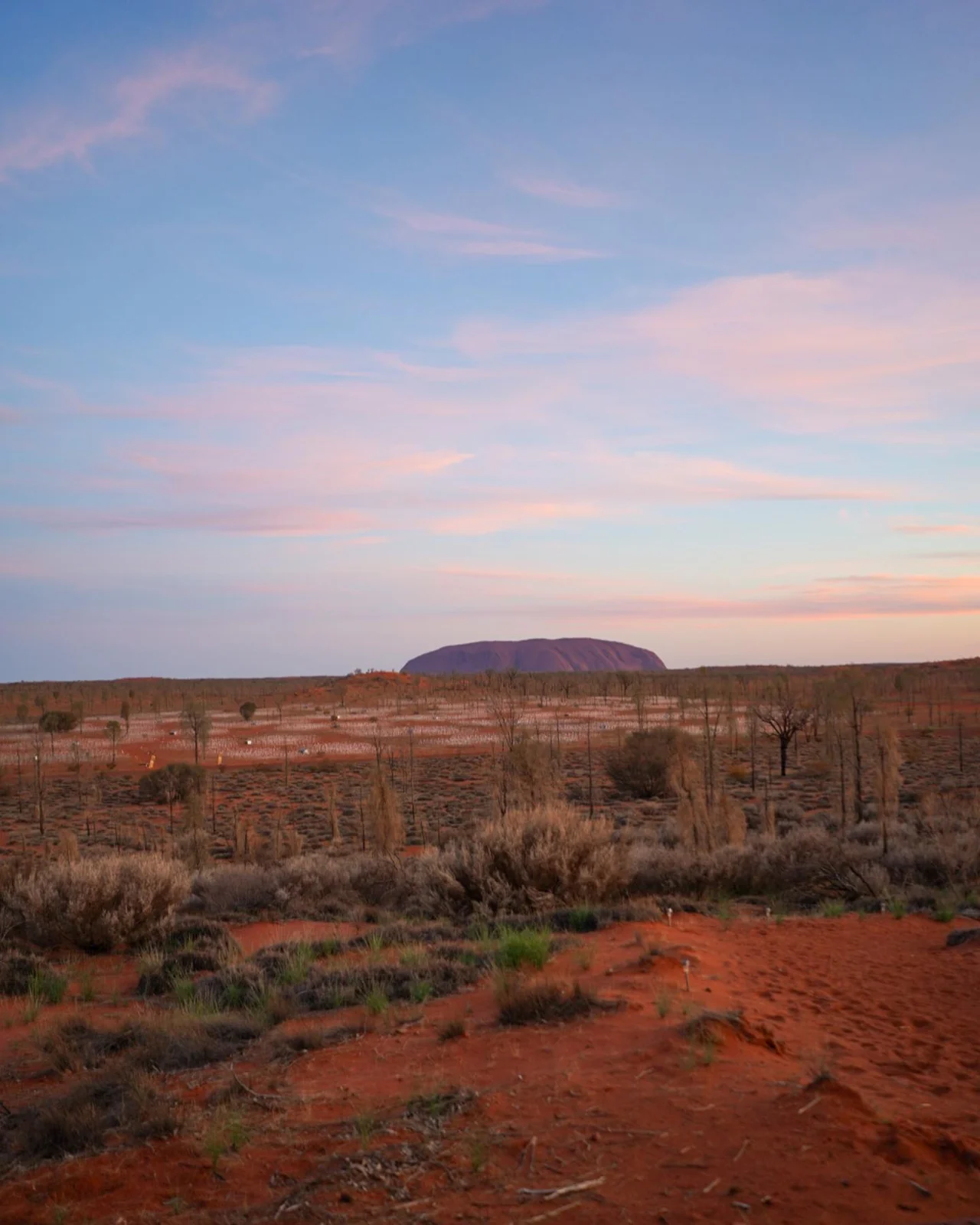
Uluru beneath a pink evening sky. Arrive at the designated viewing area before the light changes so you aren’t finding parking or unpacking the camera at the last minute. Bring a layer for the time spent standing still.
One Kata Tjuṯa walk, chosen for the conditions
Arrange an early departure and choose Walpa Gorge or a Valley of the Winds option that matches current access and your ability. Parks Australia classes the full Valley of the Winds circuit as Grade 4 and gives three to four hours. Keep the rest of that morning clear for the walk and transport. If the heat or terrain is unsuitable, shorten the plan using official guidance; don’t make completing the circuit the measure of the visit.
Day 2 afternoon · Return and onward travel
Have lunch and leave a generous buffer before a flight or long drive. If you want the full Uluṟu base walk and a big Kata Tjuṯa hike, add a day. Both won’t fit in this intro plan.
Uluṟu is a place of deep cultural significance to Aṉangu, with different features connected to Tjukurpa. Read the signs and respect places where photos aren’t allowed.
Kata Tjuṯa’s domes create a different sense of scale and enclosure from Uluṟu’s long profile. Give the walk its own time. It’s more than another sunset backdrop.
If flying out, settle the luggage and airport transfer before setting off in the morning. For a long walk, a third night gives you a more comfortable departure day and another chance at suitable weather. On a two-day introduction, keep the final hours for lunch and travel. Don’t let a last-minute walk be the thing standing between you and your flight.
What to budget
Prices checked September 2026. These are for the named ticket or service. Check your date and what’s included before you pay.
- Uluṟu–Kata Tjuṯa adult park pass: AUD 38 — Three-day pass for adults aged 18+; tours and transfers are separate. Price source
Budget AUD 20–40 per person for a simple meal. That’s a rough guide. Drinks and nicer restaurants cost more. Price transfers separately, especially private drivers, boats and airport trips.
A few photo tips
- Use designated sunrise or sunset areas and follow all sacred-site photography restrictions; the changing light is worth watching before taking the next frame.
- At Kata Tjuṯa, photograph only where permitted and include the dome contours. Stay on the track and avoid making an image dependent on entering a restricted area.
If the weather changes
Follow park advice for heat, storms and closures; use the Cultural Centre when open and keep exposed walks for suitable conditions.
The final day and your flight
Morning flight: save this outing for another day and go straight from your overnight base to Ayers Rock Airport. If you’re staying out of town and the transfer is tight, move closer the night before.
Afternoon flight: Keep to breakfast and a nearby permitted stop only if the transfer timing is comfortable; leave Kata Tjuṯa for a full outing. Leave time for luggage collection, the complete journey to Ayers Rock Airport and the airline’s check-in guidance; shorten the outing before reducing that buffer.
Two days, or one more?
Two days can introduce Uluṟu and Kata Tjuṯa without putting a long walk into every spare hour. Add another day if you want both the full base walk and a substantial Kata Tjuṯa hike. Check what each booking includes: park entry, transfers and guided activities may be separate. Follow Aṉangu guidance on photography, including places where cameras should stay away.
Booking checks
Buy the required park pass and check current alerts. Track repair notices have affected sections of the base walk, so verify the exact route before departure. Follow Aṉangu requests on photography and use the official heat and water guidance.
Visitor information and official links
Useful booking links (optional)
Connected, from arrival.
Keep maps, hotel details and bookings close at hand. Find an Airalo eSIM for your next trip.
15% offNew Airalo usersANDYPANELNEW10% offAll Airalo usersANDYPANELCodes apply automatically through these links. Valid until 30 June 2027.
Before you buy, check your phone is unlocked and supports eSIMs, and look at the coverage, data and activation rules.
I may earn a commission through these links. As an Amazon Associate I earn from qualifying purchases.