
FROM MY TRAVELS
Angkor and Siem Reap
Last updated: October 2026
My tuk-tuk was waiting outside the hotel at 4.30 am. Seeing Angkor Wat at sunrise made it worth getting up, although my elephant-print market outfit was giving the temples some competition.
Route overview
Stops are approximate. Dashed lines show the order, not the roads. Optional stops are swaps, not extras.
Select a stop below to locate it. Drag to pan; use the controls or arrow keys to explore.
Before you go
- Temple dress code: cover your shoulders and knees when visiting Angkor’s temples. Choose a sleeved top and trousers or a skirt that covers the knees; bare shoulders and shorts or skirts above the knees are not permitted in sacred areas. Angkor visitor code of conduct
- Carry Cambodian riel for small purchases. US dollars are also used by many tourism businesses, but confirm the currency and change before paying; worn dollar notes can be refused.
- Cards are useful at larger hotels and restaurants. Keep cash for smaller stalls and a prearranged tuk-tuk, unless a supported payment method is confirmed.
- Arrange a driver for the temple circuit and agree the stops, waiting time and return. A city ride-hailing fare does not automatically include a full temple day.
- Keep your Angkor pass available and buy through the official ticket service. Transport and a guide are separate from admission unless the booking explicitly includes them.
- Save the hotel location in Khmer and English. An offline translation app helps; ‘arkun’ means thank you.
- Use a registered SIM or compatible eSIM and save the temple meeting points offline. Check the data plan before leaving Siem Reap for the day.
Sorting out the practical bits? See the tools I use when I travel for data, bookings, gear and China payment tips.
A note on the links I may earn a commission from bookings or purchases through these affiliate links.
A route for your visit
Allow three temple days from Siem Reap, with a midday break built into the longer outings. Your arrival and onward journey need additional time; a late arrival is not a usable first temple day.
Day 1 · Angkor Wat, with or without sunrise
Allow roughly three hours for the approach, courtyards and galleries, with more time if you hire a guide to explain the carvings. Sunrise changes the start of the day, not the importance of the visit. If you choose it, arrange breakfast and expect to return to Siem Reap for a proper rest afterwards. Agree the guide’s service separately from the driver so you know who is providing the historical context. If you’d like someone to explain the carvings, Angkor guide options on Klook are worth a look; check whether the temple pass and driver are included.
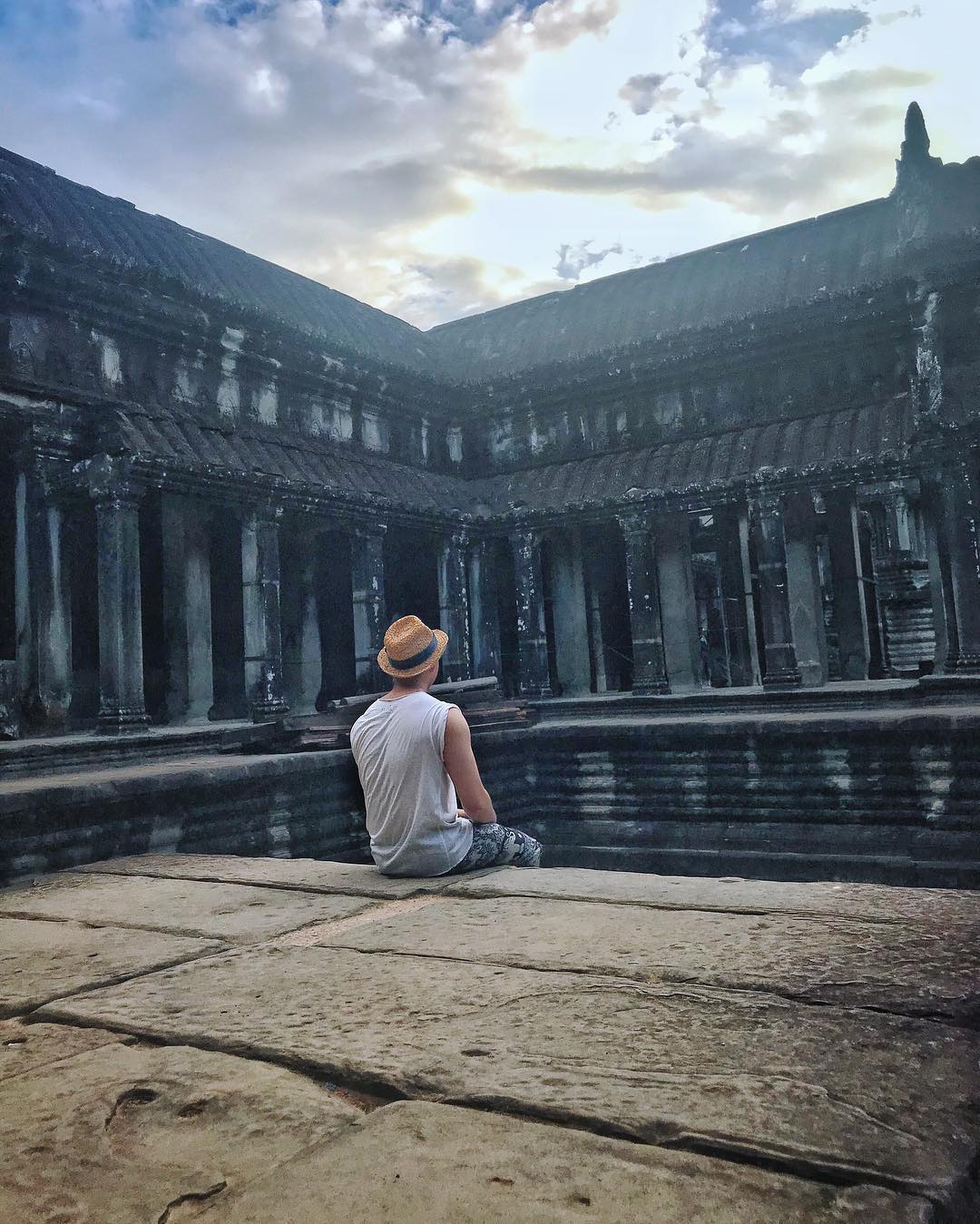
A courtyard pool surrounded by Angkor Wat’s stone galleries. 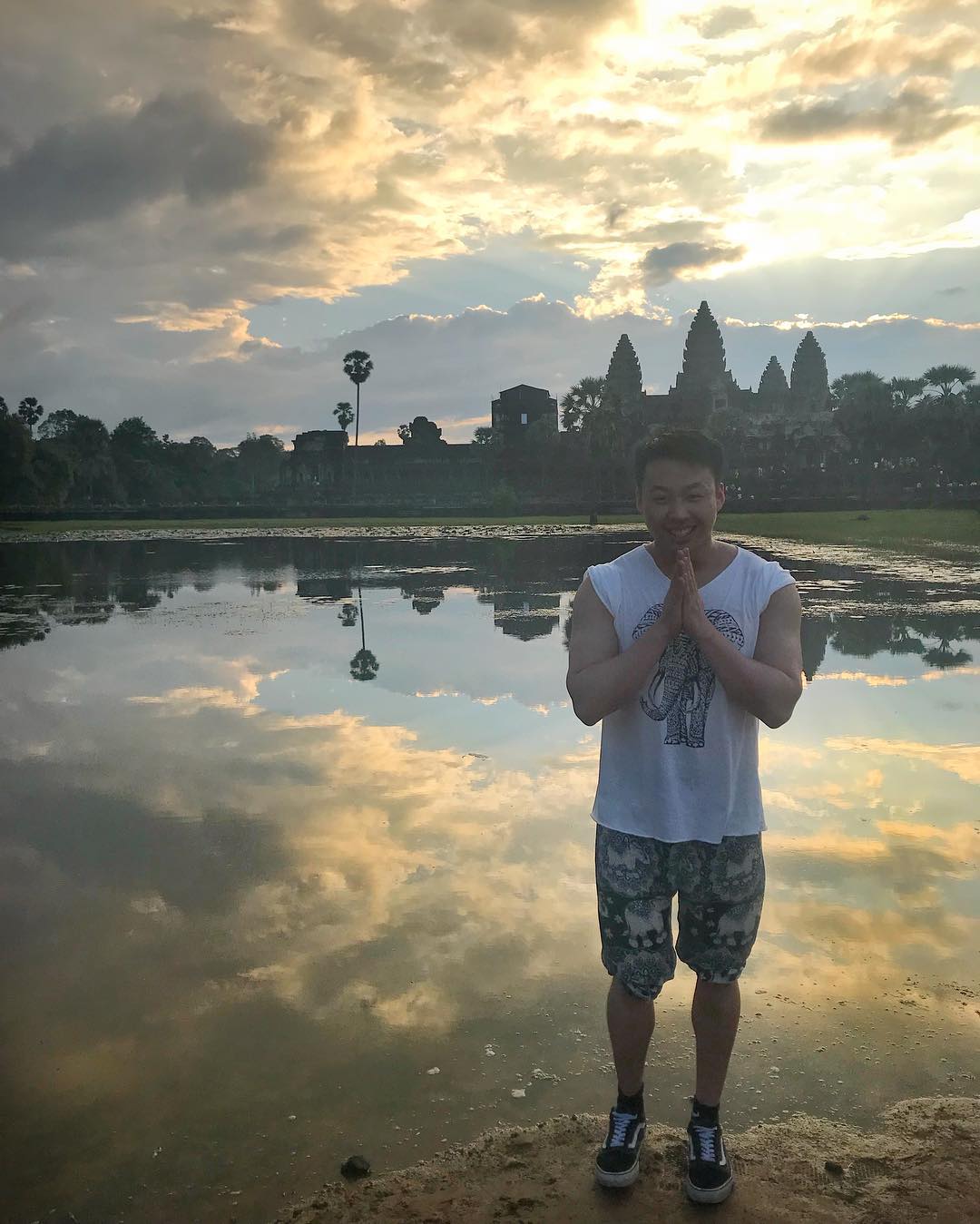
Angkor Wat reflected in a pool beneath a golden sky. 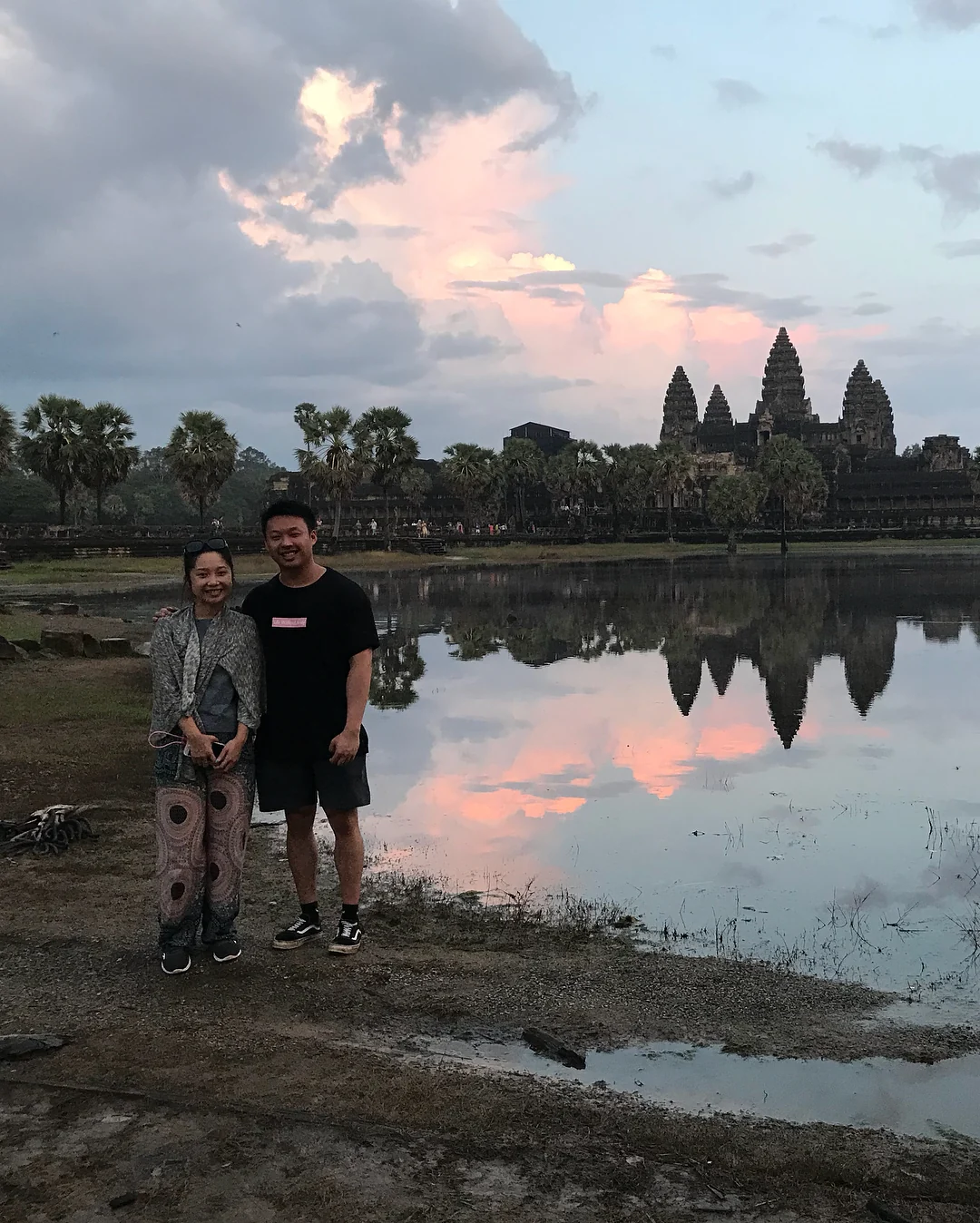
Angkor Wat and its reflecting pool at sunrise. Day 1 · An afternoon in Siem Reap
Return for lunch and a rest after Angkor Wat. If you want to head out again, choose a museum or craft visit in town. Keep the afternoon flexible after the early start.
Angkor Wat began as a Hindu temple dedicated to Vishnu and later became a Buddhist place of worship, with its galleries preserving stories in stone. Look at the carvings, not just the famous outline.
Go back to Siem Reap for lunch and get out of the strongest heat. After that alarm, a long afternoon break at the hotel is fair enough. If you still want to explore, the Angkor National Museum is a possible cultural continuation, subject to its current opening arrangements. A craft visit or café can also fit. The goal is getting to dinner still keen for tomorrow, not wiped out.
Day 2 · Angkor Thom, then Ta Prohm
Give Bayon time for its stone faces and galleries. Then make Ta Prohm the main temple of the afternoon. Ta Som is the smaller return-visit choice that connects with my bridge-and-lily-pond photograph. Add it on the third morning if you want it, but swap out another temple. The day is hot enough already.
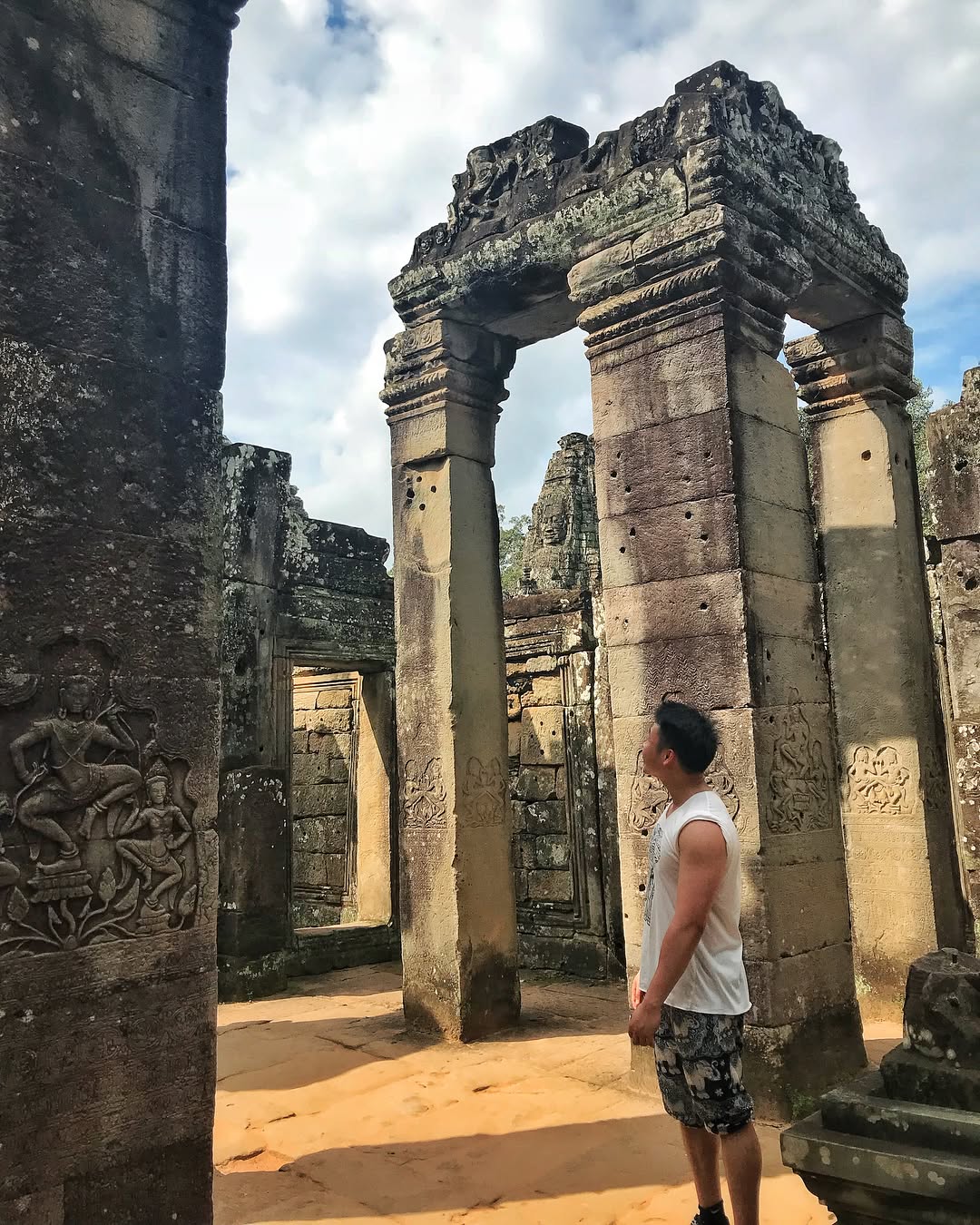
Bayon’s face towers make Angkor Thom feel distinct from Angkor Wat’s long galleries and broad approaches. The faces change as you walk around. Stick to the paths and don’t chase one perfect angle.
Ta Prohm’s temple remains and large trees make the relationship between buildings and forest unusually visible. The roots get all the photos, but the stonework is just as good.
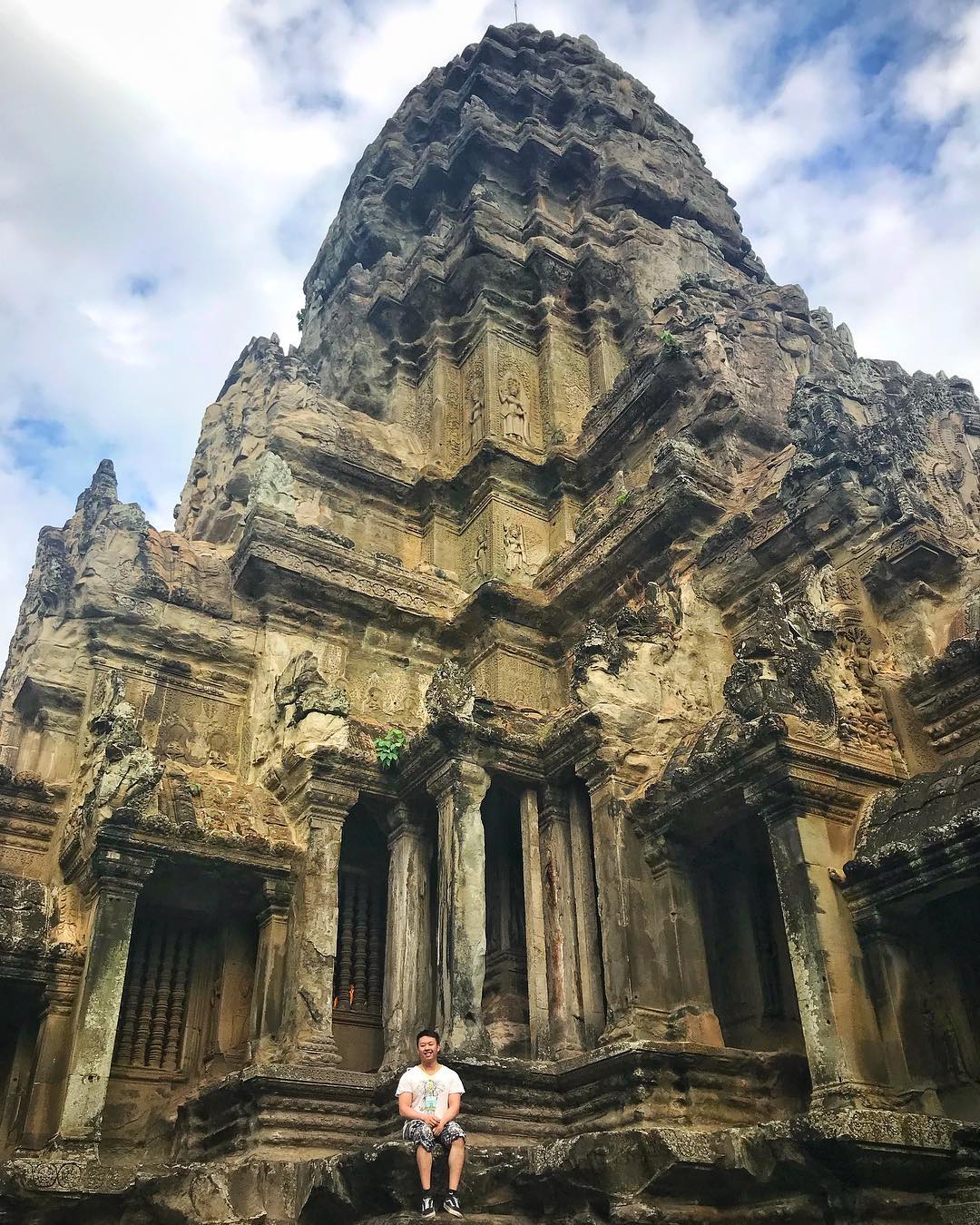
A carved temple tower in the Angkor complex. 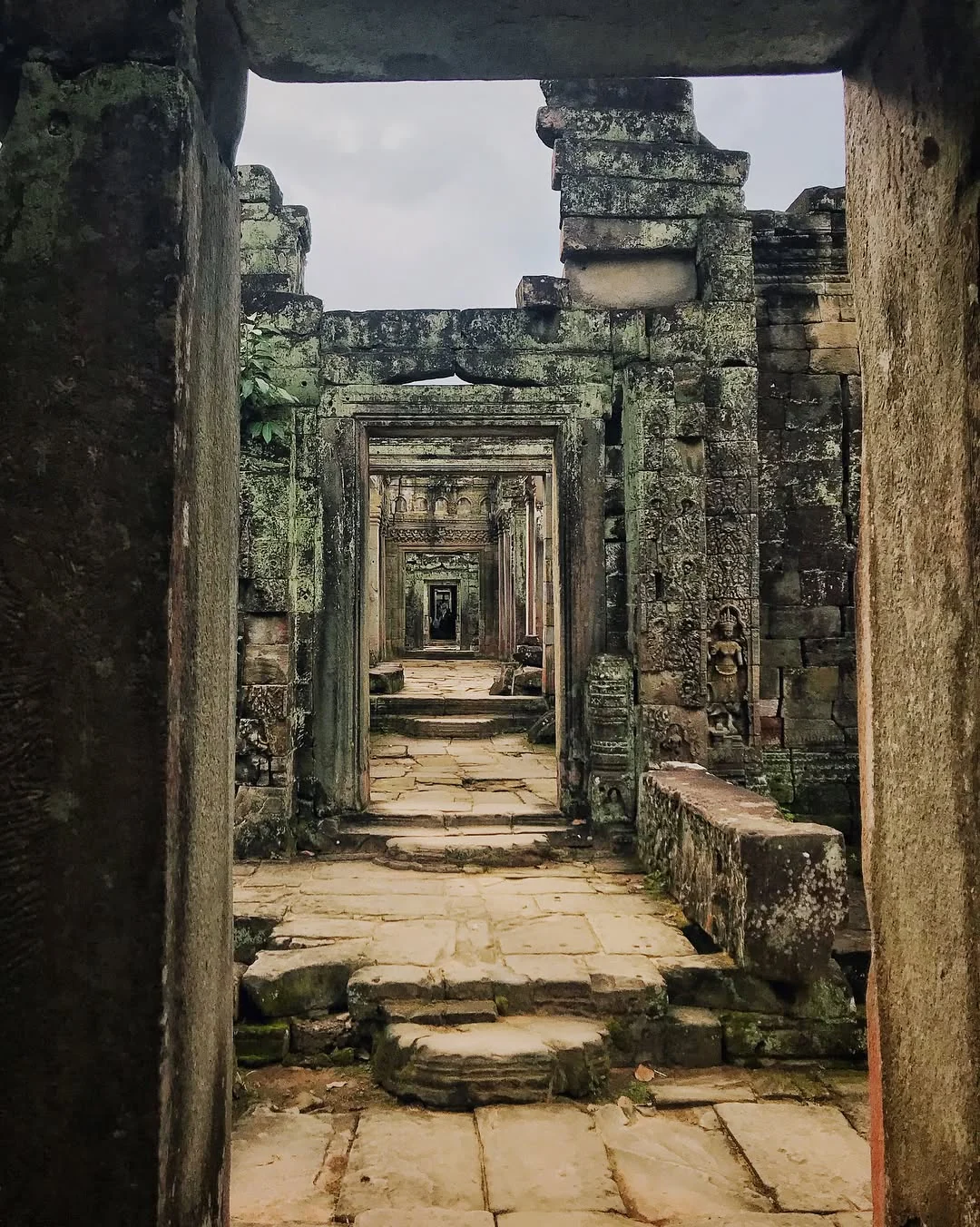
A series of carved stone doorways in the Angkor complex. 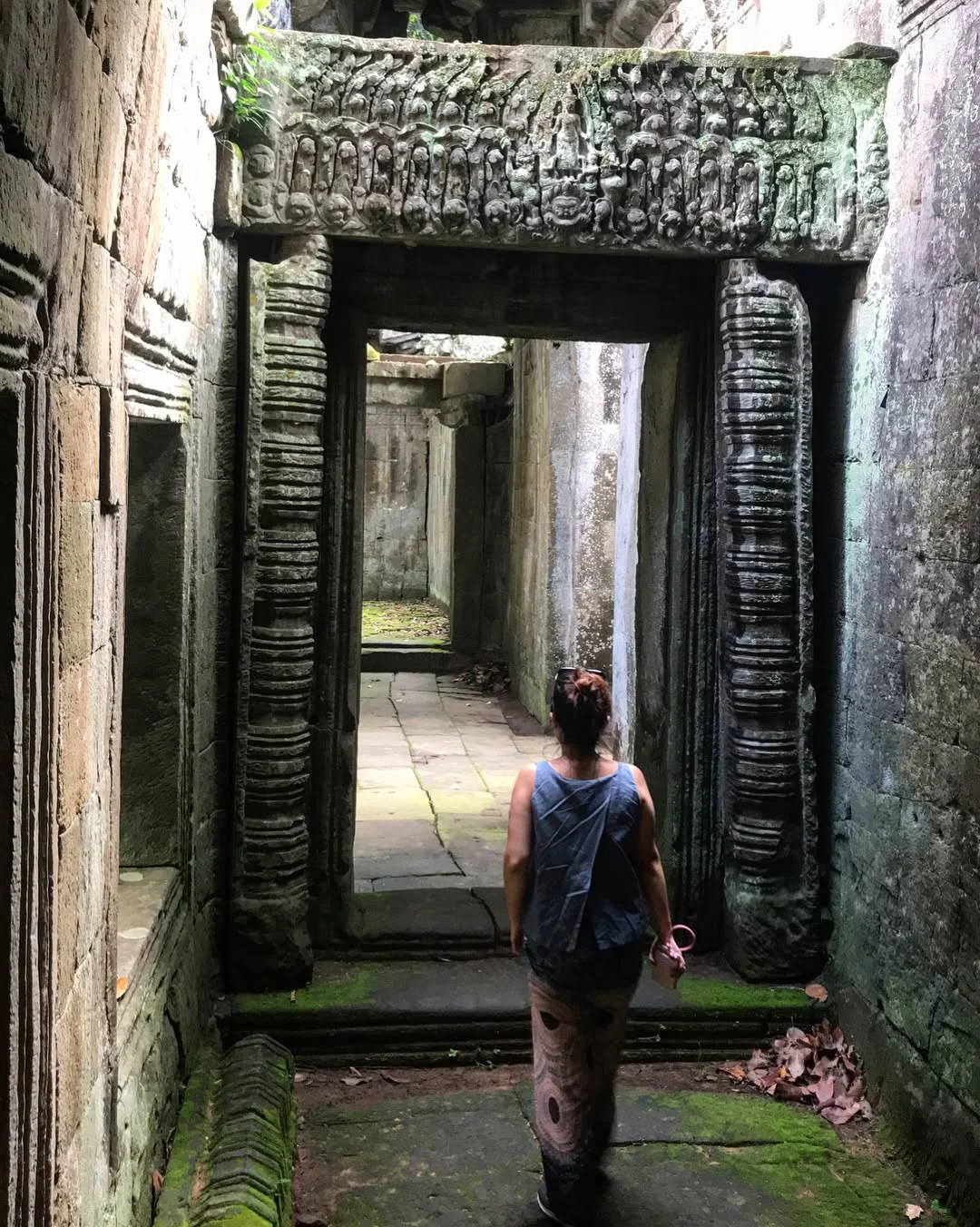
A moss-covered stone doorway in the Angkor complex. Day 3 · Choose what the first two days left you wanting
Preah Khan keeps the morning focused on another temple complex without turning the final day into a long-distance excursion. Banteay Srei is the alternative when its carvings interest you enough to justify the additional drive. Choose one, then reserve the afternoon for Siem Reap or departure. On a one-day visit, cut the route to Angkor Wat plus Bayon or Ta Prohm; trying to reproduce three days in one means mostly travelling between gates. Ta Som appears in my older photos and is one option for a quieter third-day temple visit.
Preah Khan’s sequence of courtyards and passages rewards a slower visit after the better-known temples. It’s worth it if you like looking closely. Skip it if you’d rather not add another long drive.
Banteay Srei is especially known for intricate carving in warm-coloured stone. It’s a longer drive, so only go if those details interest you.

Still water reflecting trees near Ta Som, from a separate Angkor stop. 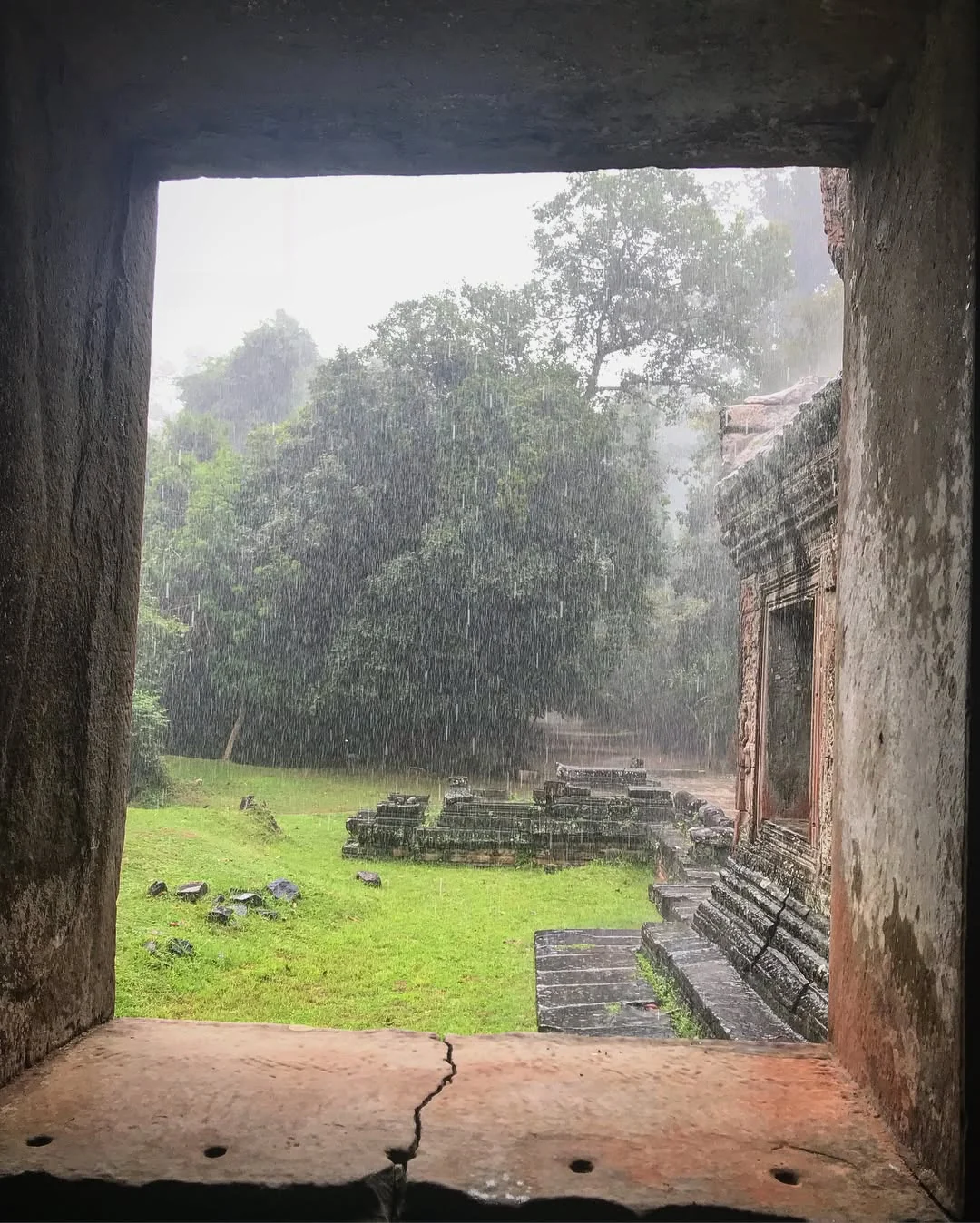
An Angkor temple courtyard framed by a stone window.
What to budget
Prices checked September 2026. These are for the named ticket or service. Check your date and what’s included before you pay.
- Angkor one / three / seven-day pass: USD 37 / 62 / 72 — Official attraction prices are charged in US dollars even though Cambodian riel is the local currency. The three-day pass suits this route; transport and guiding are extra. Price source
Budget KHR 20,000–60,000 per person for a simple meal. That’s a rough guide. Drinks and nicer restaurants cost more. Price transfers separately, especially private drivers, boats and airport trips.
A few photo tips
- At Angkor Wat, sunrise is busy; use the designated viewing area and consider a later gallery visit for more space.
- At Bayon and Ta Prohm, use permitted doorways to frame depth, avoiding fragile masonry and roped-off sections.
- Soft morning light suits the carvings; do not use flash around worshippers or block narrow passages.
If the weather changes
Use a Siem Reap museum and lunch during sustained rain, and shorten temple visits when stone becomes slippery.
The final day and your flight
Morning flight: stay within reach of Siem Reap–Angkor International Airport the night before, then keep the morning for checkout and the transfer. Allow for the airline’s check-in time as well as the trip.
Afternoon flight: allow for the substantial airport drive; keep any temple visit short, early and close to the planned luggage pickup. Work out the transfer and bag pickup time before deciding when to finish.
A driver and a guide do different jobs
Agree transport and historical guiding separately so you know what's included. Arrange breakfast if you're going out before dawn, and choose your pass for the days you actually want to use. The official Angkor Enterprise link below has the current options.
Booking checks
Purchase the appropriate pass from Angkor Enterprise and check its validity and site coverage. Confirm individual temple access and clothing requirements.
Visitor information and official links
Useful booking links (optional)
Connected, from arrival.
Keep maps, hotel details and bookings close at hand. Find an Airalo eSIM for your next trip.
15% offNew Airalo usersANDYPANELNEW10% offAll Airalo usersANDYPANELCodes apply automatically through these links. Valid until 30 June 2027.
Before you buy, check your phone is unlocked and supports eSIMs, and look at the coverage, data and activation rules.
I may earn a commission through these links. As an Amazon Associate I earn from qualifying purchases.